Author: ADEA Secretariat

School Leadership in Tanzania – Country Mapping Report

This report provides a comprehensive assessment of the policy, practice, research, and institutional landscape of school leadership in Mainland Tanzania and Zanzibar. Developed by the African Centre for School Leadership (ACSL) in partnership with national institutions, the report aims to identify strengths, gaps, and strategic opportunities to strengthen school leadership as a driver of quality, equity, and improved learning outcomes.

Using a mixed-methods approach that combined policy reviews, analysis of 161 research publications, surveys, interviews, focus group discussions, and stakeholder validation, the study examines governance structures, professional development systems, leadership practices, research capacity, and sector coordination. 

The findings highlight significant progress through policy reforms, leadership training programmes, and institutional support led by ADEM and its partners. However, persistent challenges remain, including uneven access to professional development, limited leadership autonomy, gender disparities, fragmented research, weak collaboration, and insufficient translation of research into policy and practice. The report also establishes Tanzania’s first nationally validated school leadership research agenda and presents a roadmap for strengthening leadership standards, coordination, evidence use, and inclusive professional development. Overall, it concludes that sustained investment, stronger partnerships, and institutionalised evidence-based decision-making are essential to building an effective, equitable, and future-ready school leadership system.

Download the Full Report

ADEM, ACSL deliver three milestones for Tanzania’s school leadership reform

Dar es Salaam, Tanzania, 24 July 2026 – The Agency for the Development of Educational Management (ADEM) and the African Centre for School Leadership (ACSL) have delivered three interconnected milestones for school leadership reform in Tanzania: new national evidence, a research agenda, and the establishment of a national School Leadership Task Force — strengthening the foundations of a coordinated, evidence-informed approach to improving education quality.

The milestones emerged during the Tanzania School Leadership Engagement Week, held from 14 to 16 July 2026 in Dar es Salaam. Organised by ADEM under the Leaders in Teaching (LiT-LEAD) initiative in partnership with ACSL, the Engagement Week brought together more than 120 policymakers, education leaders, researchers, universities, development partners and civil society organisations to align priorities for strengthening school leadership across Mainland Tanzania and Zanzibar.

Opening the Engagement Week on behalf of the Minister for Education, Science and Technology, Hon. Prof. Adolf Mkenda, the Permanent Secretary in the Ministry of Education, Science and Technology, Prof. Carolyne Nombo, reaffirmed the Government’s commitment to school leadership as a key pillar of education reform.

“When we invest in school leadership, we invest in teachers. When we invest in teachers, we invest in learners. And when we invest in learners, we invest in the future of our country,” said Prof. Nombo.

The first milestone was the national dissemination of the Tanzania School Leadership Mapping Report and the School Leaders’ Training Needs Assessments for Mainland Tanzania and Zanzibar. Together, the studies offer the most comprehensive assessment of school leadership in Tanzania to date, giving Government a robust evidence base for policy, leadership development and institutional coordination.

The findings informed high-level discussions involving the Ministry of Education, Science and Technology (MoEST), the Prime Minister’s Office – Regional Administration and Local Government (PMO-RALG), the Ministry of Education and Vocational Training (MoEVT) Zanzibar, universities and development partners. Participants focused on turning the evidence into practical action: strengthening instructional leadership, expanding professional development, promoting gender-responsive leadership and improving coordination across the school leadership ecosystem.

The second milestone was the launch of the National School Leadership Research Agenda, a strategic framework to guide future research and strengthen the role of evidence in education policymaking. Participants also met and interacted with the inaugural cohort of ACSL School Leadership Research Grantees, whose studies will generate locally relevant evidence on instructional leadership, competency-based curriculum implementation, digital leadership, gender-responsive leadership, school-community partnerships and system leadership.

Delivering the keynote address, Prof. Tage Biswalo, a member of the ACSL Research Advisory Committee, urged researchers to embrace the principle of “For Us, By Us” — producing research that reflects Tanzania’s realities, responds to national priorities and supports evidence-informed decision-making.

The third milestone built on recommendations from the School Leadership Mapping Report, with participants shaping the approach to the functionality of a national School Leadership Task Force. The Task Force will serve as the national mechanism for coordinating school leadership work across the institutions responsible for it, strengthening collaboration, improving information sharing and better aligning investments, while remaining firmly anchored within Government systems.

Closing the Engagement Week, the Deputy Permanent Secretary in the Ministry of Education, Science and Technology, Dr. Hussein Mohammed Omar, challenged stakeholders to sustain the momentum generated over the three days and to translate the commitments made into tangible action.

“First, let us move from dialogue to implementation. The recommendations we have agreed upon should not remain in reports. They must guide our future programmes, policies and investments,” said Dr. Omar.

The Engagement Week reinforced Tanzania’s commitment to a nationally led approach to school leadership reform, and demonstrated how Government, academia, researchers and development partners can work together to shape policy, strengthen institutions and generate locally grounded solutions for school leaders. The evidence and research generated in Tanzania will also contribute to the wider body of African knowledge on school leadership that ACSL is building with governments across the continent.

Developing an Afrocentric approach to school leadership 

“Until the lion learns how to write, every story will glorify the hunter.” — African proverb

What would it mean to lead a school from an Afrocentric perspective in a way that is grounded in African realities, values, and aspirations? In other words, what would it look like to centre African knowledge systems, cultural values, and worldviews in how schools are shaped and sustained? 

As education systems across the continent continue to evolve, there is growing recognition that effective school leadership cannot rely solely on imported models. It must reflect the lived experiences, cultures, and contexts of African learners and communities. In response to this need, the African Centre for School Leadership (ACSL) is developing an Afrocentric approach to school leadership, one that re-centres African knowledge, strengthens local relevance, and supports leaders to drive meaningful and inclusive learning in their schools. 

Re-centring leadership in African realities 

While global leadership models have contributed valuable insights, they often do not fully capture the social, cultural, and systemic contexts within which African school leaders operate. 

Afrocentric leadership offers a powerful alternative—one that places African values and lived realities at the centre of practice. Grounded in philosophies such as Ubuntu, Ujamaa, Sankofa, Botho, and Seriti, it emphasises the following: 

  • Collective responsibility and community well-being  
  • Ethical and values-driven leadership  
  • Participatory decision-making and social cohesion  

This shift does not reject global knowledge; rather, it seeks to rebalance it by ensuring that African perspectives are not only represented but actively shape leadership practice. 

This approach aligns with continental aspirations, including the African Union’s Agenda 2063, which calls for African cultures and values to be embedded in development processes.  

Sankofa as a guiding principle to reimagine school leadership in Africa. 

At the heart of this work is Sankofa, a Ghanaian concept symbolised by a bird looking back while moving forward. Sankofa reminds us that progress is not linear. To move forward meaningfully, we must look back—to learn, to reclaim, and to reimagine. 

Within the exploration of Afrocentric school leadership, Sankofa serves as a guiding framework: 

  • Looking back: What made leadership effective in African contexts?  
  • Understanding the present: What realities do schools face today?
  • Shaping the future: How can leadership evolve sustainably?

Afrocentric leadership is not presented as the only model—but as a grounded, reflective approach that helps leaders navigate complexity with purpose. 

Building the trajectory together 

In March 2026, ACSL convened experts from Ghana, Kenya, and Rwanda for a week-long co-creation workshop. The focus was clear: 

  • Develop a Blended Exchange and Learning Trajectory1 (BELT) learning modules and practical exercises  
  • Design delivery approaches grounded in African andragogy  
  • Co-create assessments, and;  
  • Identify real-world case studies 

But this was not a conventional workshop. 

Rather than relying solely on presentations and theory, the week itself became an embodiment of Afrocentric facilitation. Participants engaged through storytelling, proverbs, and cultural symbols. A simple story—such as that of the “lazy man”—sparked deep reflection on responsibility and leadership. 

The group also explored themes of gender equality, social inclusion, and community-based learning. Even the tools reflected this mindset, with discussions on how digital platforms like Moodle can be adapted to support communal, participatory learning. 

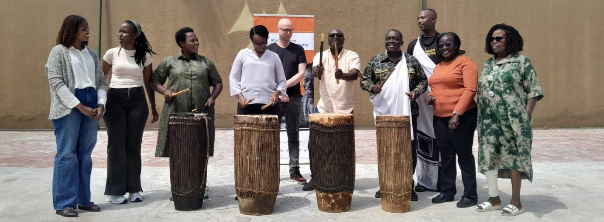
Moments of cultural immersion—such as learning about the role of Ingoma drums in Rwandan society—opened new ways of thinking about leadership. Drums, used historically to announce events, mobilise communities, and accompany royal ceremonies became a metaphor for leadership as communication, coordination, and collective rhythm. 

Learning from practice: a school visit that brought it all to life 

The workshop extended beyond the meeting room. Participants visited GS Rosa Mystica, a school that embodies Afrocentric leadership in practice. The visit offered a rare opportunity to witness how values, leadership, and inclusion intersect in everyday school life. 

The visit was more than observational—it was transformative. 

Several themes stood out. 

  • Leadership as service: One of the strongest impressions was the idea of leadership as a calling rather than a position. School leaders and staff demonstrated a deep commitment to serving learners and the community. As oneworkshop participant reflected, “Leadership is not just a professional responsibility—it becomes a calling.” 
  • Inclusion as a lived reality: In this school, inclusion is not treated as a policy requirement but as a core value. Learners with diverse needs—including children with autism—are supported through tailored approaches, structured routines, and intentional care. Another workshop participant noted: “There is no disability—only different abilities.” 
  • Community as a key partner: The school’s success was rooted in strong community engagement. Parents, volunteers, and staff worked together, illustrating that education is a shared responsibility. “It’s not just the school—the whole community is part of making this work,” a proprietor at the school noted. 
  • Every child’s right to quality education: The visit challenged assumptions about learners with special needs, prompting participants to reflect on the potential within every child. Inclusion is not driven by the possibility that one child may be exceptional, but by the principle that all children have the right to quality education. As one workshop participant posed, “What if the solution to the world’s biggest problems lies in one of these children?”. 

The last question above stayed with us long after we left GS Rosa Mystica. It is part of why the work being built through ACSL matters. 

Returning to the Source: Shaping the Future 

ACSL is currently developing a Blended Exchange and Learning Trajectory (BELT) on Afrocentric school leadership; an initiative that creates space for professional development providers across the continent to exchange experiences and explore practical ways of integrating Afrocentric perspectives into school leadership and leadership development. 

The development of the Afrocentric approach to school leadership and the related BELT trajectory for school leadership professional development marks an important step in reimagining school leadership in Africa. It is not about replacing one model with another. It is about reclaiming space—for African voices, values, and knowledge systems. 

By grounding leadership in context, culture, and community, ACSL is helping to build systems that are not only effective but also meaningful and sustainable. 

In the spirit of Sankofa, this work reminds us that the future of African education will not be built solely through borrowed models, but through the wisdom, values, and possibilities already rooted across the continent. By looking back with intention, African school leadership can move forward with greater authenticity, relevance, and purpose. 

About ACSL 

The African Centre for School Leadership (ACSL) is a pan-African initiative dedicated to supporting governments in establishing and strengthening school leadership systems that enhance teaching quality, learning outcomes, and student wellbeing. ACSL is jointly coordinated by the Association for the Development of Education in Africa (ADEA), Education Sub-Saharan Africa (ESSA), the Forum for African Women Educationalists (FAWE), and VVOB – education for development. 

The authors are grateful to Prof. Alphonse Uworwabayeho (University of Rwanda – College of Education), Prof. Catherine Kiprop (Moi University), Dr. Fay Hodza (PEAS), Ms. Genevieve Ayinkamiye (ACSL), Prof. George K. T. Oduro (Ministry of Education, Ghana), Dr Jacqueline Onyango (Kenya Institute of Curriculum Development and African Curriculum Association), Dr. Jef Peeraer (ACSL), Prof. Michael Boakye Yiadom (Institute of Educational Planning and Administration, University of Cape Coast) and Nuria Moreno (ACSL) for their expertise and participation in the March 2026 co-creation workshop and to the leadership and community of GS Rosa Mystica for their generosity and openness. 

This article was prepared by the authors with support from AI-assisted editing tools to enhance clarity and structure. All views and content remain those of the authors. 

From evidence to action: Reflections from Tanzania’s school leadership engagement Week

The Tanzania School Leadership Engagement Week ended on 17th July. Beyond presenting new evidence, it allowed stakeholders to examine and chart the future of school leadership in Tanzania — and to agree the actions needed to translate evidence into stronger policy, better practice and lasting reform.

Every education system is shaped by the quality of its leadership. Curricula change, policies evolve and investments increase. But sustainable improvements in learning depend on leaders who can translate those efforts into better teaching, stronger schools and improved outcomes for every learner. Across Africa, education systems increasingly recognise school leadership as one of the most powerful levers for improving learning outcomes, and Tanzania is moving decisively to act on that recognition. The direction is set in the Education and Training Policy, 2014 (2023 Edition), which emphasises quality education, effective governance and capable leadership.

That vision was interrogated during the Engagement Week, organised by the Agency for the Development of Educational Management (ADEM) in partnership with the African Centre for School Leadership (ACSL) under the Leaders in Teaching (LiT-LEAD) initiative. Officially opened by Prof. Carolyne Nombo, Permanent Secretary in the Ministry of Education, Science and Technology, on behalf of the Minister, Hon. Prof. Adolf Mkenda, the week provided a national platform to examine new evidence and identify practical priorities for strengthening school leadership across Mainland Tanzania and Zanzibar.

Welcoming participants, Sarish Hiribae, Country Programmes Manager for ACSL Tanzania, framed the engagement as an opportunity to deepen a shared national commitment.

“This week demonstrates what is possible when government institutions, development partners and academia come together to ensure that every school is led by a visionary leader who will contribute to students’ success.”

Evidence as a Foundation for Reform

The dissemination of the Tanzania School Leadership Mapping Report and the School Leaders Training Needs Assessment provided the first comprehensive national picture of school leadership in the country.

The Training Needs Assessment found that 85 per cent of respondents identified major gaps in leadership and management competencies — strategic planning, instructional leadership, financial management, conflict resolution and ICT, while 90 per cent called for comprehensive professional development. The Mapping Report showed that many heads of schools assume leadership roles without formal preparation, balance teaching with extensive administrative responsibilities, and use school data primarily for compliance rather than school improvement.

There was encouraging progress too. Nearly three-quarters of heads of schools and their deputies demonstrated readiness to support implementation of the Competency-Based Curriculum, particularly through instructional supervision and classroom observation. And research on school leadership has expanded from just three publications in 2010 to thirty-seven in 2024 — though gaps remain, particularly on rural leadership and gender representation among researchers.

Taken together, the reports pointed to a sharper conclusion than either offers alone: Tanzania does not lack school leadership initiatives. It lacks an integrated school leadership system — the standards, preparation pathways, coordination mechanisms and evidence needed to turn individual efforts into sustained institutional practice.

The week’s task was therefore not to introduce a new agenda, but to determine how existing national priorities become action.

From Evidence to Policy and Practice

The conversation quickly turned from what the evidence showed to what it required.

Representatives from the Ministry of Education, Science and Technology (MoEST), the President’s Office – Regional Administration and Local Government (PO-RALG), the Ministry of Education and Vocational Training Zanzibar (MoEVT), the Foreign, Commonwealth and Development Office (FCDO) and the Open University of Tanzania identified three priorities: gender-responsive policies that open pathways for more women to assume leadership positions; continuous professional development grounded in evidence; and development partner support that strengthens government systems rather than substituting for them.

For Zanzibar, a persistent challenge stood out: school leaders often receive conflicting directives from different administrative levels. Panellists also acknowledged that while teacher professional development has expanded significantly, improvements in classroom practice have been slower than expected — a gap that effective school leadership exists precisely to close. Both challenges pointed to the same remedy: strengthening formal recognition of school leadership roles and responsibilities through the ongoing review of the Education Act (Mainland), 2014 and the Zanzibar Education Act, 2006.

The discussion also stretched the definition of leadership itself. A representative from the Open University of Tanzania encouraged teacher education institutions to embrace Ubuntu as a guiding philosophy — leadership as collaborative and relational rather than centred on a single individual, shared among school leaders, teachers, education officers, policymakers and communities.

Research that Serves Practice

Research featured not as an academic exercise, but as a working tool of reform.

The launch of Tanzania’s National School Leadership Research Agenda marked a milestone in connecting research, policy and practice, and the commitment was tested immediately. All fourteen Tanzanian researchers supported through the ACSL Grants Programme presented their proposals to government officials, practitioners and the Research Advisory Committee, receiving structured feedback before implementation begins. Because the studies respond directly to challenges identified in the national mapping, future evidence will speak to national priorities from the outset.

Delivering the keynote address, Prof. Tage Biswalo, a member of the Research Advisory Committee, urged researchers to see their work as a driver of education transformation.

“Research grants are far more than financial awards. They represent strategic investments in knowledge generation, innovation and educational transformation.”

He challenged researchers to produce knowledge that is “for us, by us” — grounded in local realities, shaped by African expertise and capable of informing policy while improving practice.

Sustaining National Collaboration

One message echoed throughout the week: stronger school leadership cannot be built through isolated initiatives. Without a formal coordination mechanism, research findings risk remaining on shelves rather than shaping policy, and well-intentioned programmes operate in silos rather than advancing a shared national agenda.

To address this, participants endorsed the establishment of a National School Leadership Task Force. The Task Force will provide strategic advice to the Ministry of Education on school leadership development, ensure that research findings inform policy and practice, and track progress against agreed results. Its establishment marks a formal shift from fragmented initiatives to a coordinated, evidence-driven approach — closing the gap between what research shows and what policy delivers.

Closing the week on behalf of the Permanent Secretary, Dr Hussein Omar Mohammed, Deputy Permanent Secretary in the Ministry of Education, Science and Technology, described the dissemination of the two reports as a major milestone. He welcomed the Research Agenda as an investment in locally generated evidence and emphasised that sustained collaboration across institutions will be essential to translating commitments into lasting improvements in policy and practice.

The Tanzania School Leadership Engagement Week marked an important step towards a coherent national school leadership system, and offered a model of country-led, evidence-driven engagement that other African countries can learn from.

The conversations have concluded. The evidence is in hand. The next chapter will be defined by how effectively Tanzania translates it into stronger leadership, better-supported teachers and improved learning outcomes for every child.

African evidence informs global dialogue on leadership for education transformation

At UNESCO IIEP’s Strategic Debate, the African Centre for School Leadership contributed evidence from seven African countries to a global conversation on leadership as a driver of education transformation.

Paris, France, 30 June 2026 – As education systems around the world seek to translate ambitious policies into improved learning outcomes, strengthening leadership is emerging as the decisive link between policy and implementation. This message featured prominently at UNESCO’s International Institute for Educational Planning (IIEP) Strategic Debate on Strengthening System Leadership for Implementation and Change, where the African Centre for School Leadership (ACSL) brought comparative findings from seven African countries into a global dialogue on how education systems can strengthen implementation and deliver meaningful change.

Drawing on comparative school leadership mapping across Kenya, Liberia, Malawi, Rwanda, Sierra Leone, Tanzania and Uganda, ACSL — represented at the debate by Mamadou Lamine Sow, Policy Strategic Advisor — highlighted a consistent finding: while many countries have established education policies and leadership frameworks, implementation continues to be constrained where leadership is developed through fragmented initiatives rather than coherent national systems that connect policy, institutions and practice.

Structured around four strategic questions, the debate explored how education systems can strengthen implementation, the competencies policymakers require to lead reform, the role of middle-tier leadership in driving improvement, and how leadership development can be sustained over time. Presenting findings from UNESCO’s Global Education Monitoring (GEM) Report, its Director, Manos Antoninis, emphasised that effective implementation depends on strengthening leadership across every level of the education system, pointing to instructional leadership, stronger use of learning data, empowered middle-tier structures and sustained professional development as critical enablers of real gains in the classroom.

Regional perspectives from Latin America, East Asia and the Pacific reinforced these priorities, highlighting distributed leadership, stronger institutional capacity, collaborative decision-making, gender-responsive leadership and sustained investment in leaders’ growth. Sonia Parag, Minister of Education of Guyana, pointed to her country’s recent launch of the National Education Leadership Academy, established to strengthen the professional development of education leaders at every level, alongside an EMIS-linked leadership dashboard giving system and school leaders real-time data to guide decisions and target support where it is most needed.

These global priorities resonate strongly with ACSL’s evidence from across Africa. The mapping shows that school leaders are increasingly expected to improve teaching quality, support teachers, promote inclusion, engage communities, strengthen accountability and use evidence to drive school improvement. Yet these responsibilities are often not matched by coherent professional preparation, structured induction, continuous professional development or sustained institutional support — underlining why embedding leadership within education sector planning, human resource systems, inspection and accountability frameworks is essential to translating policy into improved learning outcomes.

“School leadership should not be viewed as an administrative function but as a strategic driver of education system transformation. When leadership standards, professional preparation, continuous development, evidence and accountability are aligned, countries are better positioned to translate policy ambition into meaningful improvements in teaching and learning,” said Mamadou Lamine Sow, ACSL Policy Strategic Advisor.

The debate demonstrated that Africa’s experience is increasingly informing global thinking on how stronger leadership can accelerate education transformation, and reaffirmed the value of nationally owned leadership systems that equip leaders at every level with the competencies, support and evidence needed to lead sustainable change. This aligns closely with the African Union’s Continental Education Strategy for Africa (CESA 2026–2035), which identifies effective leadership, institutional capacity and evidence-informed policymaking as essential to improving education quality across the continent.

It also builds on a deepening continental recognition of school leadership over the past year. The 2025 ADEA Triennale in Accra placed school leadership among the pillars of education transformation. In April 2026, the 1st International Conference of the Kenya Education Management Institute in Nairobi convened ministers and senior technical officials around ACSL’s continental mapping findings, and the following month, ministers of education meeting in Gaborone under the Africa Federation of Teaching Regulatory Authorities committed in their communiqué to recognising school leadership as a distinct professional track. The IIEP Strategic Debate extends this momentum into a global policy planning forum.

The conversation does not end with global dialogue. In Tanzania, the upcoming Education Leadership Week will launch the country’s first School Leadership Mapping Report, coordinate national action on school leadership and build consensus on a shared reform agenda — demonstrating how evidence can move beyond dialogue to drive lasting education transformation.

Design and Pilot Testing of a Blended Exchange Learning Trajectory (BELT) for African Education Policymakers on School Leadership

1. Background and Context

Education systems across Sub-Saharan Africa are undergoing reforms to improve learning outcomes, teacher effectiveness, and system governance. School leadership has emerged as a critical lever for transformation, with strong evidence linking effective leadership to improve school performance and student achievement. Global evidence confirms that school leadership is the second most important factor for learning outcomes after teaching (OECD; World Bank).

However, policy design and implementation gaps continue to limit impact on scale. Evidence from global research demonstrates that reforms fail when policymakers lack applied system leadership capacity. Traditional training models are too theoretical and not embedded in real policy processes. 

In its efforts to contribute to addressing this gap, the African Centre for School Leadership (ACSL) is planning to develop and deliver a Blended Exchange and Learning Trajectory for policymakers, offering an opportunity to enhance long-term capacity about contextually relevant approaches to strengthening school leadership policy frameworks in order to improve teaching and learning outcomes.

The African Centre for School Leadership (ACSL) is a pan-African initiative jointly coordinated by the Association for the Development of Education in Africa (ADEA), Education Sub-Saharan Africa (ESSA), Forum for African Women Educationalists (FAWE), and VVOB – education for development. ACSL’s ambition is to build supportive school leadership systems that strengthen teaching and improve learning outcomes and well-being for all. To achieve its ambition, ACSL has conducted comprehensive school leadership mapping studies at continental and country levels, with the aim of developing a clear and shared understanding of school leadership systems, frameworks, and innovations across Africa. At country level, ACSL is active in eight countries: Rwanda, Kenya, Ghana, Uganda, Tanzania, Malawi, Sierra Leone, and Liberia. 

Evidence from these mappings highlight systemic challenges, including:

  • Weak and/or non-transparent leadership career pathways
  • Limited professional development for school leaders
  • Fragmented policy frameworks and implementation gaps
  • Gender disparities in leadership representation
  • Limited capacity of policymakers to translate evidence into reform

To address these challenges, there is a need for a structured, scalable, and practice-oriented capacity development and Afrocentric approach targeting education policymakers and system leaders.

2. Objectives of the consultancy

Overall Objective:

To develop the capacity of African education policymakers on strengthening school leadership for improved learning outcomes through a Blended Exchange Learning Trajectory (BELT).

Specific Objectives:

  1. Develop content based on the priority areas from the ASCL continental and country mappings as well as previous work by VVOB and other development partners.
  2. Develop course modules based on the content developed.
  3. Test the modules with selected target countries.

3. Scope of Work

The selected service provider will be responsible for the developing the course content, designing the course modules for online and in-person delivery, and pilot testing and making relevant adjustments to the course modules of the blended learning trajectory.

3.1 Content Development Phase

  • Review ACSL–LIT–LEAD school leadership mapping reports and other relevant literature on the matter.
  • Identify capacity gaps and priorities in school leadership policy development in Africa.
  • Develop the course content based on the priorities and design a structured learning pathway that integrates comparative insights, and transformative and Afrocentric school leadership approaches – including Ubuntu, community-based governance, and equity-centered leadership

3.2 Module Design Phase 

  • Design the online (asynchronous) and in-person learning modules
  • Design blended and interactive sessions (virtual and/or in-person)
  • Create policy labs and applied learning exercises where education policymakers can work on real reforms, produce actionable policy outputs, and receive expert coaching.
  • Develop knowledge products (guides, toolkits, case studies from the 5 ACSL mapped countries and the expanded countries)
  • Anchor all relevant products and documents on the designated ACSL/ LIT-LEAD initiative.

3.3 Pilot test delivery mode

  • Online:
    • 60–70% online (self-paced modules).
    • 30–40% synchronous sessions (virtual/in-person).
  • In Person Session: Convene a yearly 3-5 day continental in person seminar, where high level education Policymakers can exchange, learn and reflect on good practices (could be linked to a continental convening, where an in-person seminar can be held).
  • Platforms: ACSL Moodle platform, ADEA-organized in-person sessions.

4. Target Beneficiaries

The program will target education policymakers and heads of relevant government agencies in selected countries:

  • Ministers, Deputy Ministers, Permanent Secretaries, Directors General of Education in selected countries.
  • CEOs of key government agencies and parastatals.

Estimated Cohort Size:

  • 20–60 gender balanced participants across countries (indicative)
  • It is anticipated that the training will cover two cohorts per year (1 per semester starting in January 2027)

5. Institutionalization and Sustainability

The service provider should propose mechanisms to ensure sustainability. The proposed solutions should be adaptable across countries and compatible both with continental frameworks and government systems.

6. Key Deliverables and Milestones and schedule of payment:

This is a strictly performance-based contract and payment of fees is subject to the delivery of products and milestones as follows:

Duration: 6 months

DeliverableDescriptionTimelinePayment
Inception ReportMethodology, workplan, stakeholder engagement plan15 days upon contract signature20% of fees
Content developmentCompetency framework and content1 Month10% of fees
Draft Learning ModulesCourse modules drafted.3 Months30% of fees
Configuration of the modules in the provided platformLMS configuration 1 Month10% of fees
Report of the Pilot TestingOutcome of tested modules, used to make further adjustmentsTBD15% of fees
Final Report including the content development, module design, and platform configuration, testing, and adjustmentPresentation of products and deliverables15 days15% of fees

7. Key Partners and Institutions

The service provider is expected to collaborate with:

  • Ministries of Education and relevant government agencies in participating countries
  • Continental and regional education bodies and coordination mechanisms on school leadership (AU-ESTI, AU-CIEFFA, AFTRA, IIEP, RECs, etc.)
  • Development partners supporting school leadership reforms.

8. Required Experience and Capacity

Institutional Requirements:

  • Proven experience in education policy and school leadership reform.
  • At least 10 years of proven experience, working on education policy analysis and planning in different parts of Africa (Anglophone, Francophone in particular), especially in school leadership.
  • Experience in the development blended learning and digital education. Such as experience with respect to school leadership would ve add asset. 

Technical Expertise:

  • Curriculum and instructional design
  • Education policy analysis and planning, with a bias on school leadership where possible.
  • Gender-responsive education
  • Monitoring and evaluation

Team Composition:

Submission should include team composition and roles.

9. Budget (Illustrative)

Cost CategoryEstimated Cost (USD)
Content Development 
Module Design & Curriculum Development 
Platform Configuration, Testing 
Total Estimated Budget 

Note: Bidders must submit detailed and justified financial proposals

10. Evaluation Criteria

CriteriaWeight
Technical quality of proposal35%
Relevant experience20%
Team expertise20%
Cost-effectiveness15%
Afrocentric relevance5%
Innovation in Learning design5%
TOTAL100%

11. Application and Selection Criteria 

Interested consortia / firms should submit: 

  • Technical proposal outlining approach, methodology, and workplan. 
  • Relevant organisational and team composition, expected roles, experience. 
  • Financial proposal (detailed budget)
  • Samples of similar assignments and evaluation reports. 

Selection will be based on technical quality, relevance of experience, methodological robustness, and value for money. 

12. Expected Start Date 

The institution/consortium engagement is expected to commence in September 2026, subject to contracting and finalisation of scope.  

13. How to apply 

Interested applicants should submit their proposals to ADEA-APPLICATIONS@AFDB.ORG no later than 4 September 2026, at midnight.

Tanzania to Host School Leadership Engagement Week to Drive the Structural Transformation of Education Leadership 

Dar es Salaam, Tanzania, 8 July 2026 – Tanzania will host its first School Leadership Engagement Week from 14 -16 July 2026, bringing together policymakers, education leaders, researchers, development partners and practitioners to align national priorities for school leadership development leadership development and advance evidence-informed reforms across Mainland Tanzania and Zanzibar. The engagement week will be opened by the Permanent Secretary in the Ministry of Education, Science and Technology, Prof. Carolyne Nombo, and will conclude with a closing ceremony officiated by the Minister for Education, Science and Technology, Hon. Prof. Adolf Mkenda, reflecting the Government’s commitment to strengthening school leadership as a key driver of improved teaching and learning, school performance and learning outcomes. 

Organised by the Agency for the Development of Educational Management (ADEM) in partnership with the African Centre for School Leadership (ACSL) under the LEAD pillar of the Leaders in Teaching (LiT-LEAD) initiative in Tanzania, the week reflects a shared commitment to strengthen the system that enables school leaders to strategically guide their schools, lead teaching and learning and act as catalysts for improved school performance and students’ learning outcomes. 

Over three days, policymakers, education leaders, researchers and practitioners will work together to strengthen collaboration, build consensus around national priorities and promote evidence-informed decision-making. The week will deliver three major national outcomes: 

  1. Establish national school leadership coordination mechanisms for both Mainland and Zanzibar; 
  2. Focus on School Leadership Research Grants and; 
  3. Disseminate school leadership mapping exercise and Training Needs Assessment (TNA) key findings. 

ADEM and ACSL will disseminate the Tanzania School Leadership Mapping Report, providing the country’s first comprehensive evidence-based exercise on school leadership policies, governance arrangements, professional development, research and sector coordination to inform future reforms. This will be followed by the inauguration of the National School Leadership Sector Coordination Task Force, creating a national mechanism to strengthen collaboration and align efforts across institutions responsible for school leadership in the country. In addition, the week will launch the National School Leadership Research Agenda and validate 14 Tanzanian research proposals supported through the ACSL School Leadership Research Grants Programme, reinforcing the role of locally generated evidence in shaping future policy and practice. 

“School Leadership Engagement Week reflects Tanzania’s commitment to strengthening school leadership as a driver of improved teaching and learning,” said Dr. Maulid J. Maulid, Chief Executive of ADEM. “By bringing together policymakers, researchers and practitioners, we are creating a shared platform to align priorities, strengthen collaboration and build the systems needed to support effective school leadership across the country.” 

School Leadership Engagement Week marks another milestone in the implementation of the LiT-LEAD initiative, delivered by ADEM with support from ACSL, to strengthen school leadership across Mainland Tanzania and Zanzibar. Since its launch, the programme has rolled out professional development for 611 secondary school head teachers and deputy head teachers in the Lake Zone Region s and is expected to reach 12,000 school leaders, with the potential to improve learning outcomes for more than 2.8 million learners. 

The priorities and commitments emerging from the week are expected to inform policy reforms, strengthen institutional coordination and shape professional development and research, laying the foundation for a more coherent and effective school leadership system in Tanzania. 

About the African Centre for School Leadership (ACSL) 

The African Centre for School Leadership (ACSL) is a Pan-African coalition comprising the Association for the Development of Education in Africa (ADEA), Education Sub-Saharan Africa (ESSA), the Forum for African Women Educationalists (FAWE) and VVOB – education for development. In partnership with the MasterCard Foundation, the coalition works with governments and education stakeholders across Africa to strengthen school leadership through policy development, professional learning and research. 

About the Agency for the Development of Educational Management (ADEM) 

The Agency for the Development of Educational Management (ADEM) is an Executive Agency inaugurated under the Executive Agencies Act, Cap.245. ADEM is mandated to improve education management in Tanzania through the provision of training, research and consultancy services. 

Media Contact 

Tausi Kiggula, 
Advocacy and Communications Officer, ACSL Tanzania 
T.KIGGULA@afdb.org 
+255 786911080 

Babu Joseph, 
Communications Officer, ADEM Tanzania 
+255 623763010 

High quality photos are available upon request 

School Leadership and Teacher Development Take Centre Stage at Yidan Prize Conference

The African Centre for School Leadership (ACSL), UNESCO IIEP, and the Learning Generation Initiative (LGI) of the Education Development Center (EDC) co-hosted Working Group 4 on School Leadership and Teacher Professional Development at the 2026 Yidan Prize Conference in Dakar, Senegal, on 30th June 2026. The session brought together policymakers, researchers, and practitioners to examine what it takes to move school leadership and teacher development from isolated interventions to sustainable, system-wide change across Africa.

Opening the session, Albert Nsengiyumva, Executive Secretary of ADEA and co-host representing ACSL, framed the central challenge directly: “Why do good policies so rarely make it into classrooms?” He situated the working group within the accountability agenda established at the 2025 ADEA Triennale in Accra — where African governments committed to a decade of implementation, not more frameworks — and argued that the answer to the implementation gap lives in two places: the quality of the person leading the school, and the quality of support available to the teachers inside it.

He drew on ACSL’s recently completed continental mapping of school leadership — the most comprehensive evidence synthesis conducted at this scale — to ground the discussion. Among its most striking findings: 83 per cent of researchers examined school leadership only as part of broader education studies, not as a dedicated field of inquiry. The result is that governments are making consequential decisions about leadership policy in a near-vacuum of relevant evidence. ACSL’s response has been concrete: USD 865,000 committed to 39 research grantees across 14 countries, organised around eight thematic priorities including leadership preparation pathways, gender equity in leadership, and school leadership in crisis contexts.

The first panel, moderated by Chinedu Anarado, ACSL Strategic Advocacy and Communication Advisor, drew insights Jihane Lamoure of UNESCO IIEP, Dr. Michael Boakye Yiadom of the Institute of Education Planning and Administration (IEPA) in Ghana and Jocelyn Cirezi, ACSL Strategic Education Advisor. The discussion converged on a distinction that ran through the entire session: Africa does not have a shortage of school leadership training programmes. It has a shortage of school leadership systems. Panelists identified the critical difference — programmes end when funding cycles close; systems endure because they are embedded in national policy, ministry structures, career pathways, and domestic budgets. Key priorities included developing clear competency frameworks and career pathways for school leaders; institutionalising coaching and mentoring through district and sector structures rather than as project add-ons; ensuring appointments to school leadership roles are based on demonstrated competencies rather than seniority; and investing in monitoring, evaluation, and learning systems that generate evidence policymakers can act on. The panel also stressed that leadership development must embed principles of inclusion and equity from the outset — including gender-responsive leadership and attention to the needs of diverse and underserved contexts.

The second panel, moderated by Olawale Samuel of EDC, featured Patrick Nkenge, Deputy Team Lead from the Regional Teacher Initative in Africa (RTIA), Deborah Kimathi of the Learning Generation Initiative and Youssouf Ouattara, Officer in Charge of the Teaching and Learning Cluster, Education Sector, UNESCO Regional Office for West Africa. The discussion centred on a recurring failure in teacher professional development across the continent: programmes designed without teachers, without alignment to classroom realities, and without the involvement of middle-tier structures do not scale — and do not last. Panelists called for co-construction of TPD programmes through inclusive partnerships involving governments, teacher education institutions, schools, researchers, development partners, and teachers themselves. Strengthening district and regional structures as the engine of TPD coordination, mentoring, and monitoring emerged as a critical enabling condition, alongside the systematic use of data to identify and target actual teacher needs rather than delivering standardised programmes regardless of context.

Across both panels, one conviction held: school leadership and teacher professional development must be treated as strategic national investments embedded in ministry systems and domestic budgets — not as donor-funded initiatives with a project end date. The two themes are not separate policy levers. A teacher’s classroom practice is shaped by the quality of leadership around them. A school leader’s impact on learning outcomes is mediated entirely by how well they support, develop, and challenge the teachers in their school. Investment in one without the other leaves the system incomplete.

The outcomes of Working Group 4 feed directly into the continental school leadership agenda that ACSL — through its consortium partners ADEA, VVOB, ESSA, and FAWE — is advancing across Africa. A full summary of the session’s findings and recommendations were shared in plenary. The conversation continues at FLEX 2026 in Lilongwe, where peer accountability on education commitments moves from aspiration to scorecard.

CALL FOR EXPRESSIONS OF INTEREST – Consultancy: Design and Implementation of ACSL Impact Studies (2026–2030)

Education Sub Saharan Africa (ESSA), on behalf of the African Centre for School Leadership (ACSL), invites Expressions of Interest from qualified African-led consortia to design and implement a portfolio of impact studies between 2026 and 2030.

This multi-country consultancy will generate robust evidence on the effectiveness of school leadership initiatives across Africa, helping to inform policy, practice, and system reform. The selected consortium will work closely with ACSL and partners to design and deliver six interrelated impact studies using mixed-methods, contribution-based, and Afrocentric approaches.

Applications are encouraged from African-led consortia with complementary expertise in:

  • Education systems research;
  • Monitoring, evaluation, and learning;
  • Impact evaluation methodologies;
  • Policy analysis and research uptake;
  • Multi-country research implementation.

Applications must be submitted by 20 July 2026 at 09:00 GMT.

Interested consortia should review the full Terms of Reference and submission requirements available through the official ESSA announcement page and submit their application package in accordance with the instructions provided therein.

For detailed information on the consultancy scope, eligibility requirements, and application process, please visit:

ESSA Consultancy Announcement – ACSL Impact Studies (2026–2030)

We strongly encourage eligible African-led consortia to apply and contribute to strengthening the evidence base for school leadership development and improved learning outcomes across Africa.

Call for Quotations: Videography and Photography Consultancy Services

The African Centre for School Leadership (ACSL) invites qualified videography and photography service providers to submit quotations for a consultancy supporting the Blended Exchange and Learning Trajectory (BELT) on Afrocentric School Leadership.

This assignment will involve the production of high-quality video and photography content to document, communicate, and amplify Afrocentric school leadership practices and the BELT learning experience across participating countries. Deliverables include introductory videos, case study videos, event coverage, photography packages, and supporting communication assets.

Contract Duration: July – November 2026 (5 months)
Estimated Start Date: 15 July 2026
Budget Ceiling: USD 18,000 (inclusive of VAT)
Submission Deadline: 30 June 2026, 17:00 hrs

Qualified consultants should demonstrate at least three years of relevant experience in videography and photography, preferably within the education and development sectors, and possess strong storytelling, editing, and visual communication skills.

Interested service providers are invited to submit a technical proposal, financial proposal, company profile, portfolio, CVs of key personnel, and references in accordance with the requirements outlined in the Call for Quotations.

Submit proposals to: ann.mwangi@vvob.org
Copy: maurice.munyaneza@vvob.org; nuria.moreno@vvob.org

For full details, please consult the Call for Quotations document.

Tanzania launches nationwide school leadership programme targeting 12,000 school leaders

Mwanza, Tanzania, 28 May 2026 — The Agency for the Development of Educational Management (ADEM) and the African Centre for School Leadership (ACSL) on Thursday May 28th, delivered three interconnected milestones, including the official launch of the LiT-LEAD Programme for Tanzania, the commencement of school leadership training with regional and District Education Officers from six Lake Zone regions and the introduction of the school leadership training manual that will underpin the training programme. Together, these three outputs represent Tanzania’s most comprehensive single-day investment in school leadership development, and a concrete demonstration that the country is poised to build a solid school leadership system.

Implemented through a partnership between ACSL and ADEM under the Leaders in Teaching (LiT-LEAD) initiative, the LiT-LEAD programme will train 12,000 secondary school head teachers and deputy head teachers across Mainland Tanzania and Zanzibar, improving learning outcomes for more than 2.8 million learners.

The launch was officiated by Prof. Carolyne Nombo, Permanent Secretary in Tanzania’s Ministry of Education, Science and Technology, and brought together representatives from government institutions, development partners, faith-based organisations, civil society, and secondary school students — a reflection of the broad national ownership the programme has earned before its first cohort completes training.

In her remarks to launch the programme, Prof. Nombo set the standard the programme is designed to meet: “It is essential for school leaders to have the ability to manage their institutions with efficiency, accountability and academic integrity to ensure that every learner has access to quality education and improved learning outcomes.”

The training programme will combine face-to-face and online learning, equipping school leaders with practical skills in instructional coaching, school improvement planning, and evidence-based leadership. Crucially, it is not a standalone initiative. Through a Memorandum of Understanding signed between VVOB — under the ACSL partnership — and ADEM in May 2025, the programme is formally embedded in ADEM’s national professional development portfolio and aligned with leadership appointment standards. Certified school leadership training will become a permanent part of how Tanzania selects, prepares, and recognises its secondary school leaders — independent of any single project cycle.

The launch comes at a pivotal moment for Tanzania’s education reform agenda. As the country advances competency-based curriculum reforms placing learner-centred teaching and critical thinking at the heart of classroom practice, effective school leadership has been identified not as an administrative function but as the primary driver of whether reform reaches learners. LiT-LEAD is Tanzania’s institutional response to that recognition.

For ACSL, the launch represents the kind of systems-strengthening outcome its continental mandate is built on. But for ADEM, it reflect the sort of partnership the agency craves, to ensure it can achieve its mandate to Tanzanians. “This partnership marks a significant step forward in our national efforts to professionalise school leadership,” said Dr. Maulid J. Maulid, Chief Executive of ADEM. “By providing structured, high-quality training aligned with national priorities, we are laying a foundation for sustainable improvements in teaching and learning.”

Alongside the programme, ACSL officially launched the school leadership training manual — the curriculum resource developed by ACSL to drive the LiT-LEAD training across Tanzania. The manual provides school leaders with a structured, evidence-based learning pathway covering instructional leadership, school improvement planning, professional learning communities, and leadership within the context of Tanzania’s competency-based curriculum reforms.

The manual is an ACSL intellectual product — designed to be contextualised for Tanzania while drawing on the comparative school leadership evidence that ACSL has generated across multiple African countries through its continental mapping exercises. It will serve as the primary training resource for the 12,000 school leaders the programme will reach, and as a lasting curriculum asset within ADEM’s professional development system beyond the LiT-LEAD programme itself.

Its launch on the same day as the programme’s formal inauguration is significant: the curriculum and the system that will deliver it are being introduced together, signalling that Tanzania is not waiting for infrastructure to catch up with ambition.

Within hours of the launch ceremony, the transition from launch to implementation began. ACSL and ADEM convened Regional Education Officers and District Education Officers from six Lake Zone regions — Mwanza, Shinyanga, Simiyu, Mara, Geita, and Kagera — for the first formal training session under the LiT-LEAD Programme.

As the first regions to implement the programme, the Lake Zone cohort will generate early evidence on delivery modalities, participant uptake, and system readiness that will directly shape the national rollout across all regions of Mainland Tanzania and Zanzibar. The sequencing is intentional: by beginning in the Lake Zone before scaling nationally, LiT-LEAD builds in the learning loop that large-scale education programmes so often skip.

With 12,000 school leaders to be reached and more than 2.8 million learners standing to benefit, LiT-LEAD is among the most ambitious school leadership programmes on the African continent, and Tanzania’s most significant investment in school leadership to date. It contributes to a growing continental movement — one that ACSL is helping to lead — to reposition school leadership as a professional field with its own preparation standards, career pathways, and accountability systems. This shift is being built — in Tanzania, by Tanzanians, with the technical partnership of ACSL and the institutional commitment of ADEM. The programme, the curriculum, and the first trained cohort now exist. The work of reaching 12,000 leaders has begun.

ACSL commits $865,000 in cohort 1 of its school leadership research grant in Africa – largest known investment in school leadership research on the continent

New research grants programme is translating continental mapping findings into an African-led evidence agenda — targeting the systemic gaps that have left school leadership policy without the evidence base it needs

NAIROBI, 15th May 2026 – The African Centre for School Leadership (ACSL) is pleased to announce that 39 beneficiaries have received research grants under the Cohort 1 of its Research Grants Programme, committing USD865,000 to school leadership research across 14 African countries. The Research Grants Programme represents the largest known investment dedicated specifically to school leadership research on the African continent — and a defining step towards building an evidence base that is Africa-led, contextually grounded, and directly connected to the policy decisions shaping how school leaders are trained, supported, and held accountable.

The announcement comes less than two months after ACSL presented the findings of its Continental Mapping of School Leadership Initiatives in Africa at the 1st KEMI International Conference in Nairobi — the first continental-scale evidence synthesis on school leadership ever conducted. The Research Grants Programme is the direct operational response to what that mapping found.

The 2025 continental mapping exercise, conducted across 14 African countries through surveys, interviews, and documentary reviews, confirmed that school leadership research in Africa is fragmented, chronically underfunded, and insufficiently connected to the policy processes it is meant to inform. Most strikingly, 83 per cent of researchers examined school leadership only as part of broader education studies — not as a dedicated field of inquiry. The result is a critical evidence gap at precisely the level of the system where it is most costly. Policymakers designing leadership standards, governments investing in professional development, and school communities trying to hold leaders accountable are all making decisions in a near-vacuum of relevant, policy-responsive research. These findings were reinforced at the 2025 ADEA Triennale in Accra, where African ministers and senior policymakers named school leadership evidence generation as a continental priority for the coming decade — signalling that the growing political recognition of school leadership as a driver of education quality must now be matched by investment in the knowledge systems that can sustain it. The Research Grants Programme is ACSL’s direct answer to both signals.

Selected through a rigorous multi-stage review process led by ACSL’s Research Advisory Committee, the 39 grantees include doctoral holders, postdoctoral researchers, and senior research fellows from Tanzania — both Mainland and Zanzibar — Kenya, Ghana, Rwanda, Uganda, Sierra Leone, Malawi, and nine other African countries. In line with ACSL’s Gender Equality and Social Inclusion (GESI) commitments, priority was given to researchers working in arid and semi-arid regions, conflict-affected areas, and rural communities — ensuring that the evidence generated reflects the realities of populations too often absent from current research.

Cohort 1 is organised around eight thematic priorities drawn directly from the continental mapping, co-created continental school leadership research agenda and the 2025 ADEA Triennale outcomes: leadership preparation and development pathways; Afrocentric leadership models and indigenous knowledge systems; equity, inclusion, and social justice in school leadership; digital transformation and educational technology; leadership influence on teacher practice and learning outcomes; system enablers for effective leadership; distributed and middle leadership; and school leadership in emergencies and crisis contexts. The programme’s thematic architecture is aligned with the African Union’s Continental Education Strategy for Africa (CESA 2016–2025), anchoring it within Africa’s broader education transformation agenda. Twenty-five Descriptive Action Research grants of up to USD15,000 per researcher support studies of up to 12 months; fourteen Comparative Action Research grants of up to USD35,000 per researcher support studies running up to 24 months.

The diversity of researchers joining the programme reflects both the breadth of the continental evidence gap and the appetite for rigorous, policy and practice -oriented school leadership research across African institutions. “I am particularly excited because I conceived the original research idea following my years of research involvement in Botswana,” said Obumneke Ugwu, a Cohort 1 grantee affiliated with Rainbow Education Consultancy Services. “This also marks my first international research contract since establishing my consultancy. I am grateful for the opportunity to contribute to research that strengthens school leadership and educational transformation across Africa.” Ugwu’s reflection captures something central to the programme’s design intent — not simply to fund individual studies, but to build a generation of African researchers who own and sustain dedicated school leadership evidence base long after each grant cycle closes.

That intent is embedded in the programme’s structure. A critical design feature is its accountability to policy impact, not merely academic output. Every grantee is required to produce a policy brief for submission to the relevant government ministry in their country, alongside at least one peer-reviewed journal article — closing the loop between what researchers find and what policymakers can act on. All 39 grantees will also participate in the ACSL Blended Exchange and Learning Trajectory (BELT), a structured peer learning, mentorship, and coaching platform delivered in collaboration with ACSL’s Research Advisory Committee and Education Sub Saharan Africa (ESSA), ensuring that researchers work as part of a connected, continent-wide community rather than in isolation.

For Dr. Leyla Abdullahi, ACSL’s Director of Research and Programme Delivery, the programme’s significance extends far beyond the immediate research outputs. “The Continental Mapping confirmed something many of us had long observed but had never documented at this scale: across Africa, critical decisions about how school leaders are selected, trained, and supported are often being made with limited contextually grounded evidence,” she said. “This grants programme is therefore not simply about funding research. It is about strengthening an Africa-led research ecosystem that reflects African realities, priorities, and knowledge systems, while ensuring that evidence reaches the policymakers and practitioners shaping education systems.”

She further emphasised that the programme is also contributing to the co-creation of a continental school leadership research agenda and responding to the research needs identified through that agenda by bringing together researchers, policymakers, and practitioners to identify shared priorities, emerging gaps, and actionable pathways for strengthening school leadership across diverse African contexts. “The 39 researchers we are supporting in Cohort 1 are part of a growing movement to build a sustainable and policy-responsive research infrastructure that Africa owns and drives.”

Research findings will be shared through relevant government forums, national and international education conferences, peer-reviewed publications, and digital platforms — ensuring that evidence reaches not only academic audiences but also the ministries, communities and schools it is intended to serve.